Verapamil plus propranolol: why is that pairing so dangerous?
Both drugs slow the same heart in the same places, and both weaken its squeeze.
Select any card for the reasoning, what to watch for and an exam tip.
The puzzle
A patient takes verapamil for angina. A locum prescribes him propranolol for anxiety. A few days later he is dizzy and breathless, and his pulse is in the 40s.
What the ECG can show
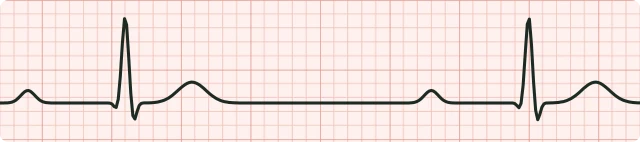
Before: sinus rhythm at a normal rate. After: fewer beats, and a long pause between each P wave and its QRS.
Before: sinus rhythm
After: slow, with a long PR interval
The answer, step by step
Who is most at risk
- Anyone on verapamil who is offered a beta-blocker for any reason: anxiety, migraine, tremor.
- Established ischaemic heart disease, such as angina: a risk of heart failure.
- Older people: STOPP flags this combination.
- Anyone already slow: a heart rate under 50, or second- or third-degree AV block.
- Intravenous verapamil with a beta-blocker: the manufacturer advises avoiding it altogether.
What to do
Key takeaway
Verapamil and a beta-blocker each slow the heart rate, slow the AV node and weaken contraction. Together they can cause severe bradycardia, heart block, heart failure and even asystole. Check for verapamil before starting any beta-blocker — propranolol for anxiety included. If a beta-blocker must be paired with a rate-limiting calcium-channel blocker, diltiazem is used only with caution.