How does the heart keep its rhythm — and where do the drugs act?
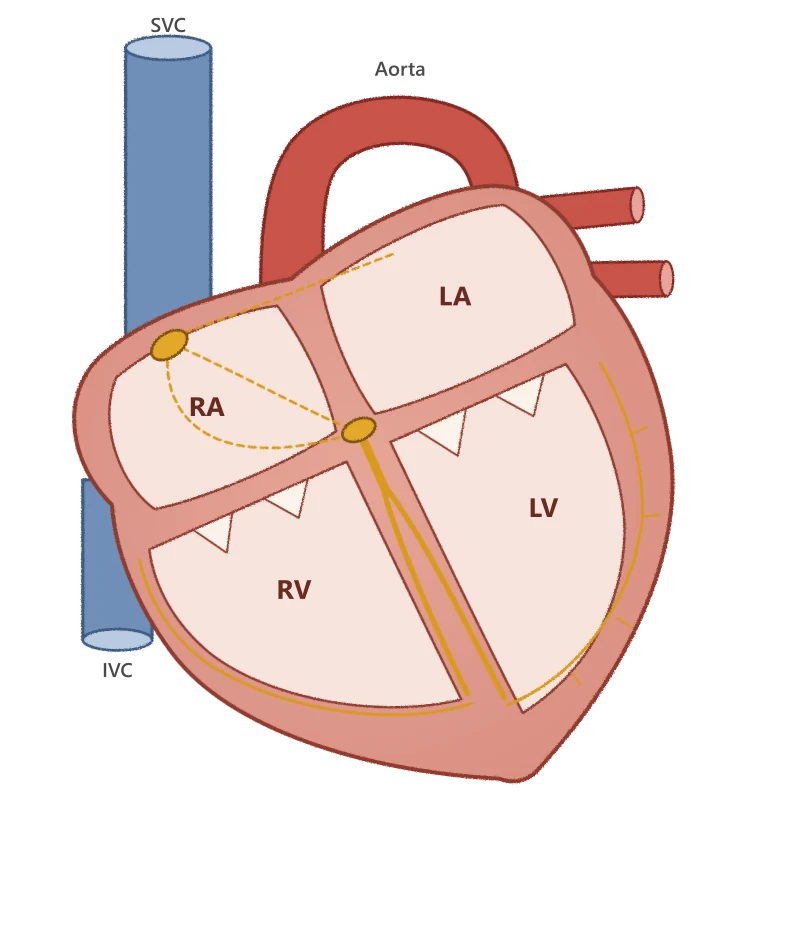
One pacemaker, one gateway, one set of fast wires. Every rhythm drug acts on a part of this circuit.
Select any card for the reasoning, what to watch for and an exam tip.
Examples
- Beta-blockers slow the SA node and the AV node
- Verapamil, diltiazem slow conduction through the AV node
- Digoxin slows the AV node — rate control in AF
- Adenosine blocks the AV node for seconds to stop an SVT
- Flecainide, amiodarone bring back sinus rhythm (chemical cardioversion)
What each part draws on the ECG
Every beat traces the same shapes, in the order the impulse travels through the heart.
Sinus rhythm
Key takeaway
The SA node sets the pace, the AV node holds each beat back for a moment, and the His–Purkinje fibres spread it through the ventricles. Rate-control drugs slow the AV node; rhythm-control drugs act on the heart muscle.